.png)


"What changed because of this data collection?"
It is one of the most common questions donors and partners ask, and a fair one.
Too often, the success of fisheries data collection is measured by visible management actions, new regulations, seasonal closures, gear restrictions, or management plans. While these are important outcomes, they are rarely the first changes communities experience.
In reality, change often begins much earlier and in quieter ways. It unfolds through gradual shifts in awareness, behaviour, accountability, and local decision-making, shaped by what communities can realistically achieve with the resources available to them.
The story of fisheries data is therefore not only about the decisions eventually made, but also about the journey that makes those decisions possible.
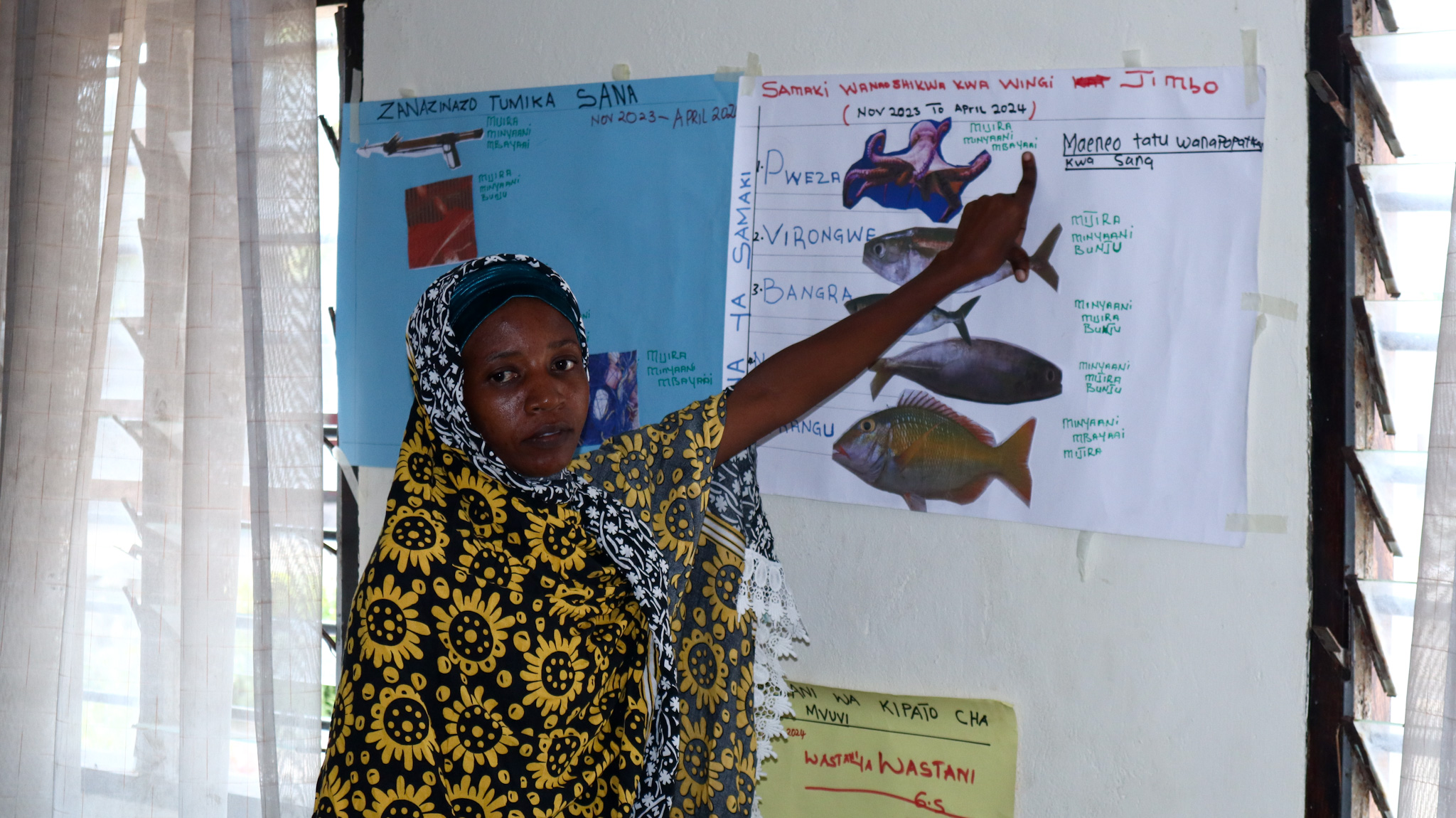
What Change Looks Like on the Ground
During community feedback sessions, fishers and BMU members are often asked a simple question: “Given what the data is showing, what should be done?”
The answers are rarely theoretical.
They are written down, sometimes on flipcharts under trees, sometimes on pieces of paper taped to walls. They reflect practical concerns and realistic solutions. In one community session, fishers proposed:
- Increasing community patrols.
- Sensitizing fellow fishers about illegal fishing practices.
- Restricting child involvement in fishing.
- Improving compliance with landing sites.
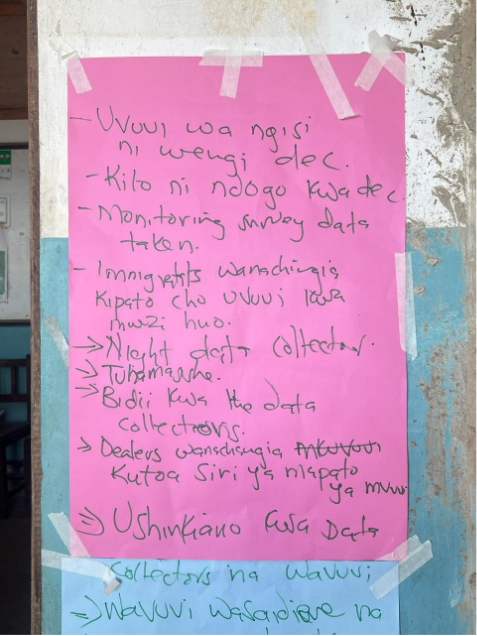
In another, the session moved beyond solutions to understanding the data itself:
- Why are catches higher in December , yet fish sizes are smaller?
- Why are some landings not being recorded?
- How do migrant fishers and fish dealers affect reporting?
Communities did not stop at identifying problems. They proposed ways to improve the quality and usefulness of the data itself, including:
- Better collaboration between data collectors and fishers
- Stronger accountability in reporting
- Improved monitoring systems, including night data collection
It may not immediately result in a new fisheries regulation or a formally gazetted management plan. Instead they produce something equally important, communities taking ownership of the information, questioning long-held practices, and collectively deciding what they can do differently.
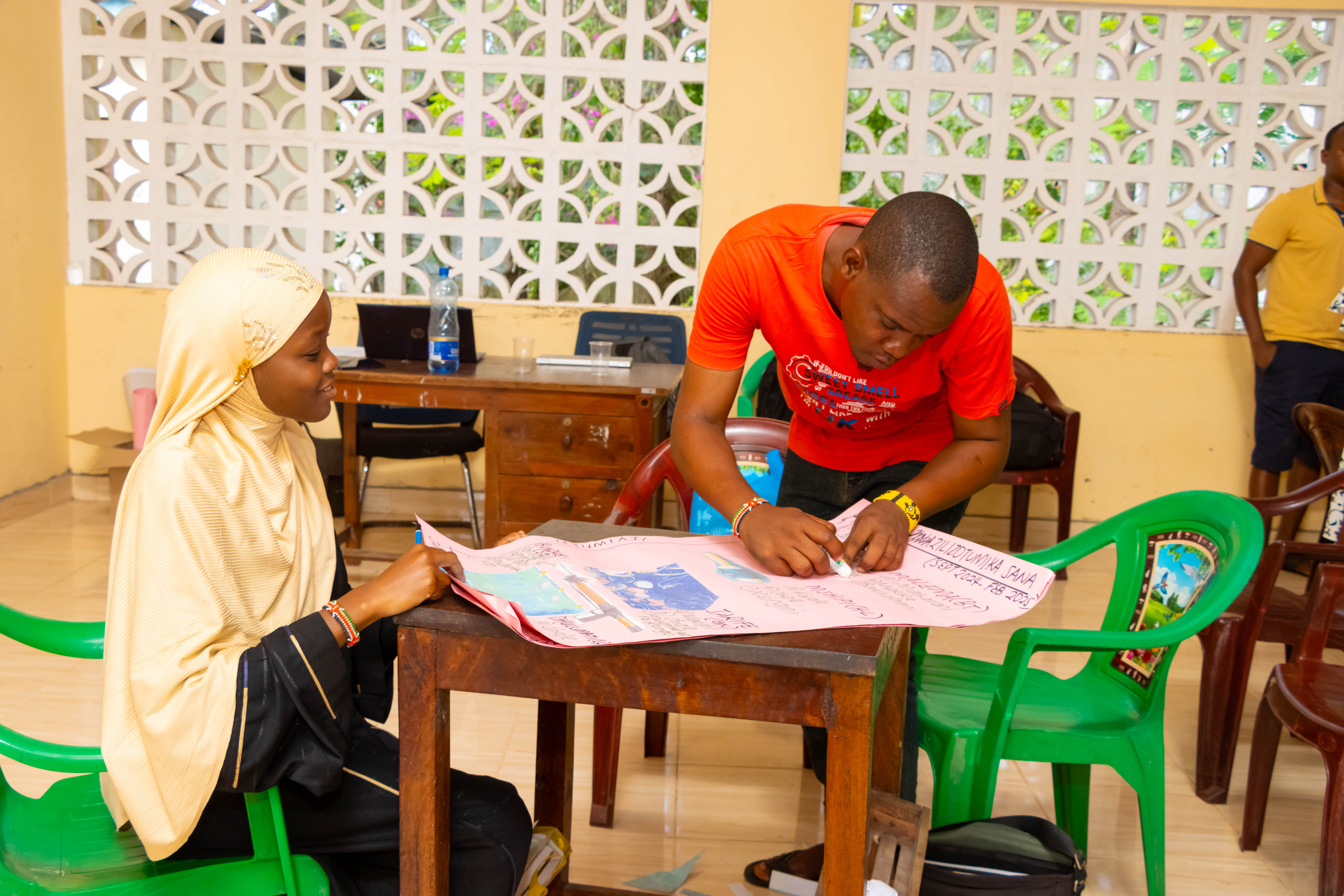
Why Bigger Management Decisions Take Time
From a donor perspective, impact is often measured through tangible outcomes such as:
- Fisheries closures enforced
- New regulations adopted
- Management plans implemented
However, many of these actions require financial resources, technical expertise, and institutional support from government agencies or conservation organizations.
For many BMUs, such support is limited.
Decisions such as fishery closures or gear restrictions carry immediate economic consequences, they are social and economic decisions. Fishing remains the primary source of livelihood for many households, and temporary closures often translate into immediate income losses. Without viable alternatives or external support, proposing such measures can feel unrealistic or even risky.
Consequently, communities tend to focus on actions that are within their control rather than delaying action altogether.
Rather than waiting for large-scale interventions, they begin by improving awareness, strengthening compliance, enhancing monitoring, and making better use of the information already available to them. When external support eventually aligns with this foundation, more transformative management actions become possible.
How Data Translates into Action
Consistent fisheries data collection becomes valuable when it is returned to communities and used as a tool for reflection and decision-making. While the resulting changes may appear modest, they often create the foundation for more significant management actions in the future.
One of the earliest outcomes is Increased awareness.
Data helps communities better understand the consequences of illegal fishing practices, the implications of declining catches, and the importance of complying with fisheries regulations. This growing awareness influences attitudes and behaviour, often long before formal policy changes occur.
For example, fisheries monitoring data from Jimbo BMU shows that beach seine use declined from approximately 70% in 2022 to 40% in 2024 and was no longer among the five most used fishing gears by 2026. While several factors may have contributed to this trend, regular data feedback and community sensitization have played an important role in reinforcing responsible fishing practices.
Similar behaviour changes have also been observed in other BMUs. Samson Iha, a community data collector from Wesa BMU, recalled one fisher who previously harvested turtles but changed his practices after repeated awareness sessions.
A certain fishman used to catch turtles, but after continuous conservation awareness, he stopped. Now he uses a handline to target finfish," - Samson Said, BMU data collector recalls
Reliable fisheries data has also strengthened the ability of BMUs to mobilize external support by providing credible evidence for funding proposals and investment. For example, Wasini BMU successfully secured support from the Kenya Coastal Development Project (KCDP) and the GEF Small Grants Programme (UNDP) to expand community-led coral restoration initiatives.
Similarly, Mkunguni BMU, through consistent fisheries data collection and reporting, attracted support under Kumbatia Seafood's Reef Restoration Project, funded by the United Nations Capital Development Fund (UNCDF) through the Global Fund for Coral Reefs (GFCR). The project supported the transition to sustainable pelagic fisheries through the provision of four fishing boats equipped with outboard engines, training on sustainable fishing practices and fish handling, access to cold-chain facilities, and improved market linkages. As a result, four fishing boats are now operating under the programme, twelve fishers have transitioned from reef fishing to pelagic fishing, and three fish traders have been integrated into an improved seafood value chain.
Likewise, Jimbo BMU successfully secured funding through the GEF-7 Small Grants Programme (implemented by UNDP) to establish a community-managed seagrass closure, strengthening local fisheries management while contributing to seagrass conservation and long-term ecosystem restoration.
"Through data, we now see opportunities we never knew existed. We have already received support from the County Government because we have data to demonstrate our needs, and we believe that with more consistent data collection, even greater support will follow." - Mwanatumu Makopo, Secretary Mwaembe BMU
Data has also strengthened local governance.
Where fisheries data reveals that fish are being landed outside designated landing sites, BMUs can respond by encouraging compliance and improving monitoring systems. A compliance assessment conducted by COMRED in 2024 across BMUs in the Shimoni–Vanga seascape recorded approximately a 20% increase in fish catch data submitted through designated landing sites in Majoreni and Vanga. Improvements were also observed in revenue collection, with Munje BMU recording a 20% increase in fish levy submissions, while Mkwiro and Shimoni BMUs each recorded increases of approximately 10%.
In other communities, fisheries data has strengthened local enforcement efforts.
Although limited financial resources often prevent regular sea patrols, BMUs such as Kibuyuni have increased land-based patrols and community surveillance, contributing to a reduction in illegal fishing activities and reinforcing a stronger sense of community ownership over fisheries management.
From "What Changed?" to "What Became Possible?"
These examples illustrate the value of fisheries data is not limited to producing statistics or informing government reports. Its greatest contribution often lies in strengthening the capacity of communities to understand their own fisheries, identify challenges, prioritize solutions, and advocate for support. Therefore, the narrative should shift from “what changed” to “what became possible”.
Through consistent fisheries data collection and feedback, communities have:
- Become better informed about the state of their fisheries.
- Strengthened local governance and accountability.
- Improved compliance with fisheries regulations.
- Enhanced transparency in fisheries management.
- Increased their ability to attract investment and external support.
- Begun making decisions based on evidence rather than assumption.

These outcomes may not always make headlines, but they are the building blocks upon which sustainable fisheries management is built.
If we want to tell more accurate and meaningful stories about impact, we need to broaden how we define it.
Change is not always immediate.
It is not always large-scale.
And it is not always externally driven.
Sometimes it looks like a BMU improving levy collection after reviewing its own fisheries data.
Sometimes it is fishers choosing to land their catch at designated sites because they understand why accurate reporting matters.
Sometimes it is a community questioning fishing practices that had long been accepted as normal.
These are not small changes.
They are foundational shifts that make larger transformations possible.
For donors, practitioners, and policymakers alike, there is an opportunity to better align expectations with reality by recognising incremental community-led changes as meaningful impact, investing in long-term processes rather than only short-term outcomes, and supporting communities as they transition from awareness to more complex management actions.
Because sustainable fisheries are not built overnight.
They are built step by step, often beginning with something as simple as communities seeing, understanding, and acting on their own data.
So, What changed?
Perhaps not everything.
But something important did.
Communities began to see, question, and act on their own fisheries data.
And that is where lasting change begins.

