.png)



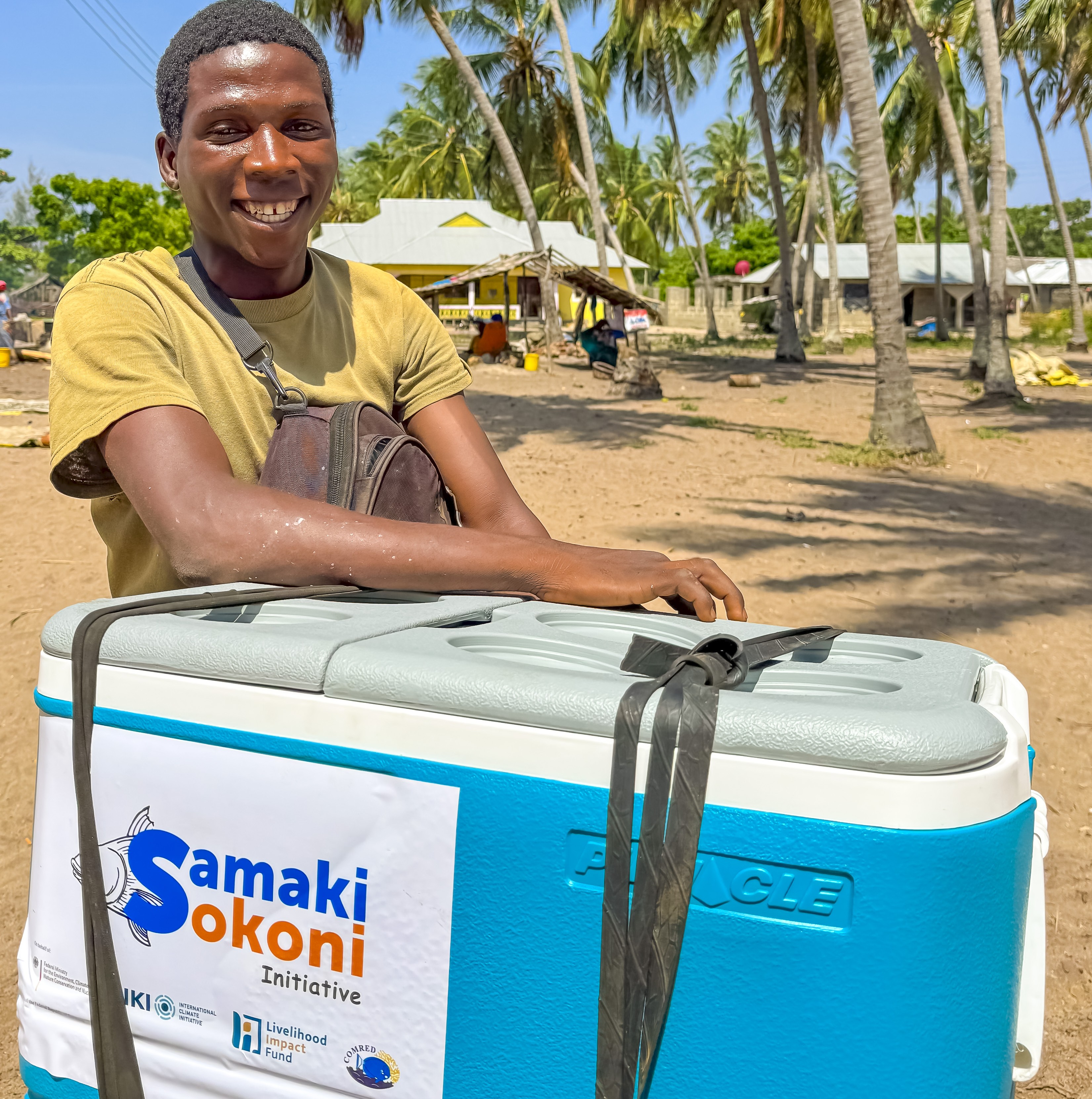
For three years, Johana Mwero has earned a living as a fish trader.
He buys fish at the Jimbo landing site and sells them across Perani, Menza Mwenye, Dzombo, and other villages within Lungalunga Sub-county. He started this business for one reason — to provide for his family.
His day begins before sunrise.
Johana ties a wooden crate onto his bicycle and rides for nearly three hours to reach the landing site. That bicycle is not just transport, it is how he feeds his family.
But every day, he faces the same challenge: heat.
A Day in the Life of Johana
Johana stores his fish in a wooden crate packed with ice.
The ice is made from frozen water blocks and sold to traders at about KES 10 per kilogram. On average, Johana spends KES 200 a day just to keep his fish cold.
As the sun rises:
- The ice melts quickly
- The fish warms up
- He has to keep buying more ice along the way
- Sometimes, the fish spoils before he sells it
If his bicycle breaks down, the losses are even worse.
“When there are delays on the road, the fish can go bad before it reaches customers,” he says. “That means going home with less money.”
Spoiled fish does not just mean wasted effort.
It means less money for food, school needs, and daily expenses.
The Same Struggle
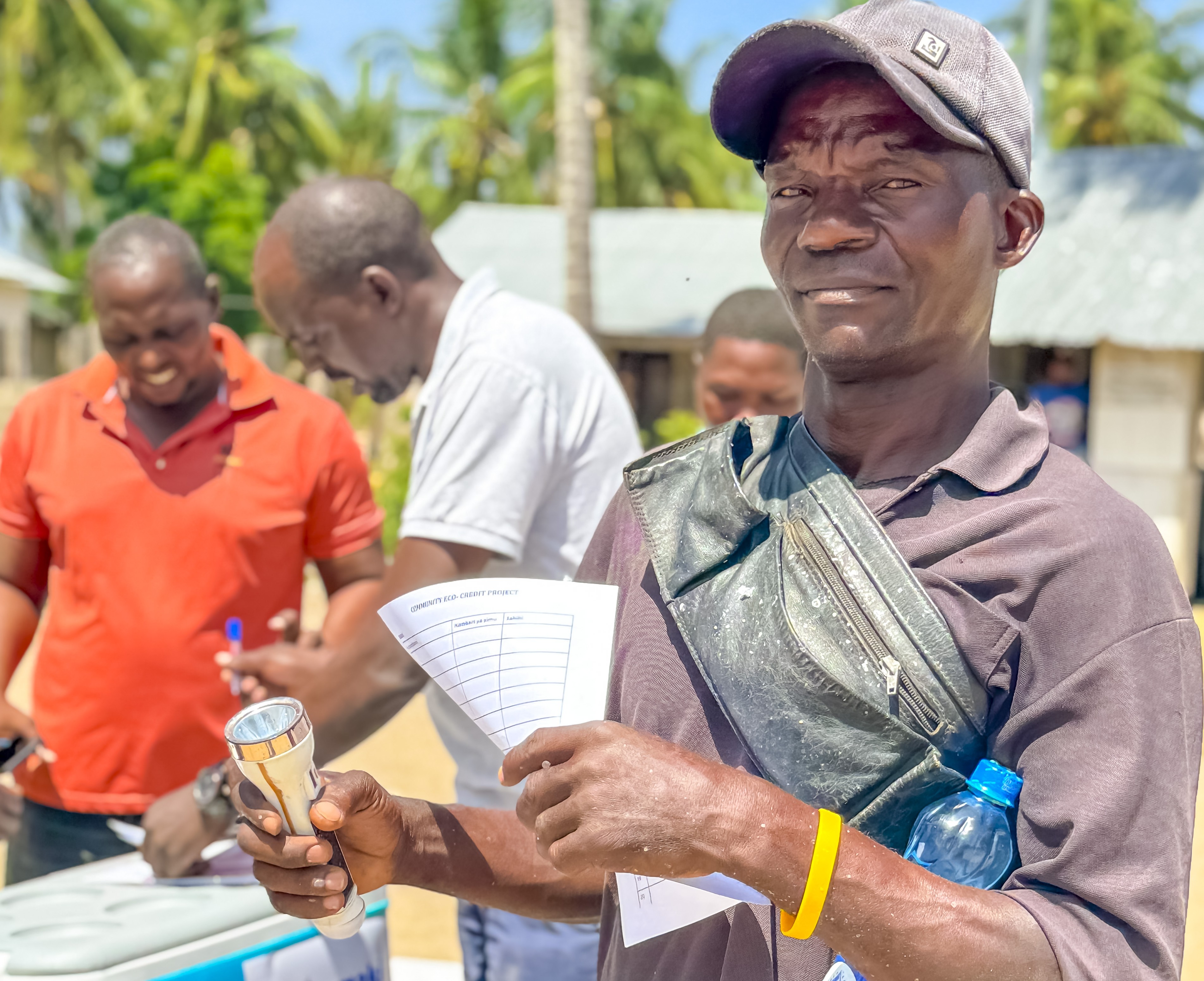
Maita Mwayama, like many other fish traders, faces the same reality.
Armed with a torch, he leaves home at 3:00 a.m. to buy fish. Some days he cycles. Other days he pays KES 1,200 for a motorcycle ride, before selling a single fish.
When the ice runs out, the fish spoils.
“It hurts to lose fish after leaving home at 3:00 in the morning,” he says.
To reduce losses, Maita sometimes boils, dries, or fries unsold fish. This means extra hours of work, just to recover part of his investment.
Both traders are working hard.
But too much of their energy goes into preventing loss instead of growing income.
The Turning Point
The big switch did not come as a free handout.
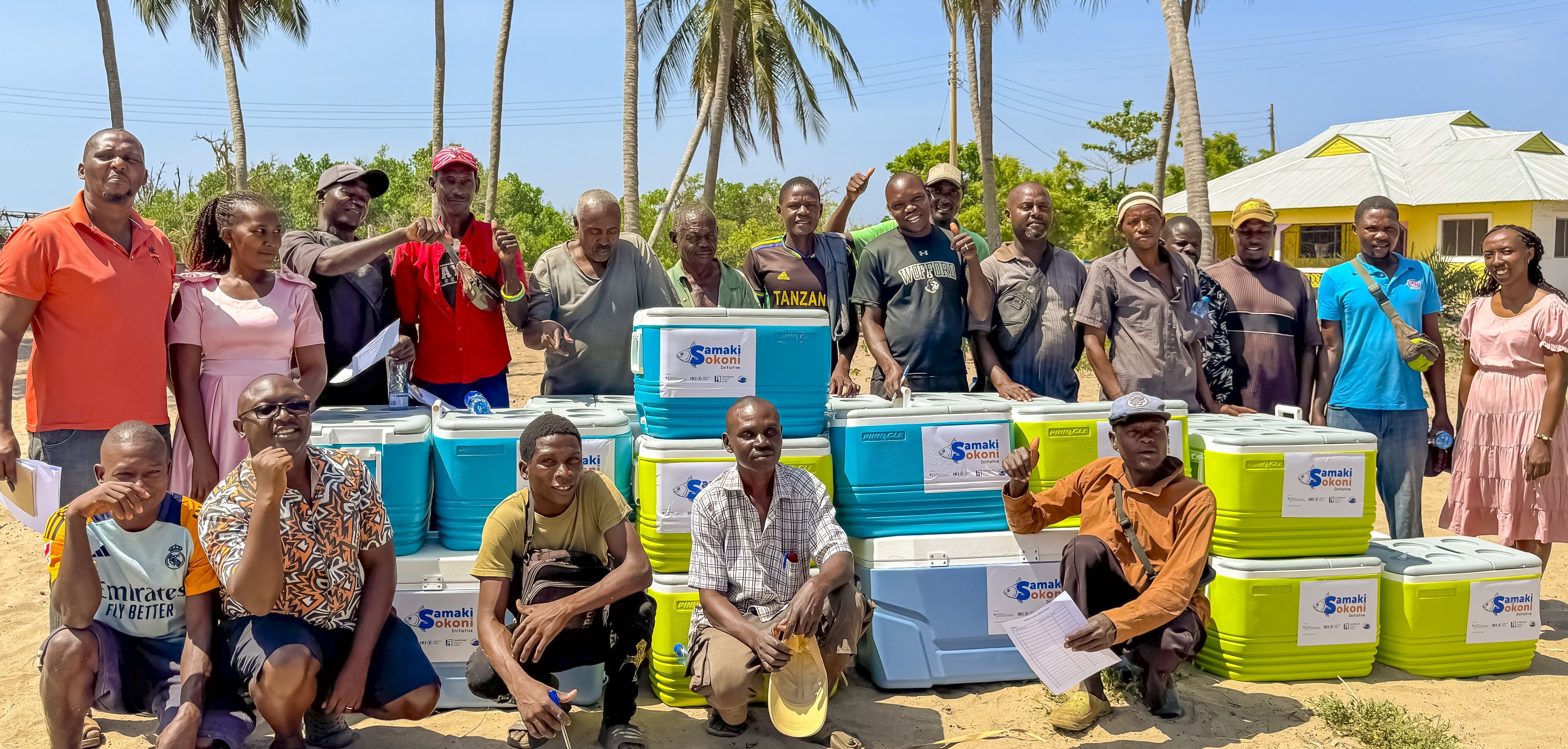
COMRED supported fish traders to come together, not only as a traders’ group, but also as an Eco-credit group.
Here’s how the model works:
- COMRED contributes 60% of the cost of a cooler box
- Each trader contributes 40%, paid in agreed installments
- Repayments stay within the group as a revolving fund
- Members can later borrow from that fund to grow their businesses
This means the support does not end with one trader.
It stays in the group.
“We couldn’t afford these cooler boxes alone,” they explain. “But through the group, we can. What we repay helps us as traders to grow together.”
Life After the Big Switch
With cooler boxes, fish now stays fresh for longer even in coastal heat.
- Less fish is thrown away
- Traders are not forced to rush sales
- Transport delays no longer mean automatic losses
- Income is more predictable
“Now even if I don’t sell all the fish in one day, I can still sell them later,” Johana says. “I no longer panic when the sun is too hot.”
Maita no longer spends extra hours boiling and frying fish just to avoid waste.
They are no longer racing against melting ice.
They are planning for growth.
Beyond One Group
Our goal is to reach 300 fish traders transforming how fish is traded along the Kenyan coast.
So far, four fish trader Eco-credit groups — about 80 traders — have moved from wooden crates to cooler boxes.
That is 80 small businesses now losing less fish and retaining more of what they earn.
Challenges Ahead
Access to ice remains one of the biggest challenges for fish traders.
Current ice sources rely on freezers, which are often unreliable, costly, and far from landing sites. Potential solutions include establishing ice-making machines at or near landing sites, and providing freezers preferably powered by solar energy.
Transport is another challenge. Most traders rely on bicycles, which increases travel time and limits the amount of fish they can carry. Access to affordable motorcycles would greatly improve efficiency and incomes.
These are practical gaps and clear opportunities for partnership.
Join the Next Phase
Small-scale traders are already doing the hard work.
Partner with us to expand community-owned solutions that reduce fish spoilage and help families retain more income.
Because sometimes real change begins with a simple switch —
from loss to stability,
from daily uncertainty to steady growth.

