.png)


I remember the first day I met the Kibuyuni dagaa (sardine) processors. Most of them were women. They did not have a processors' group, and some lived in other villages and only came to Kibuyuni during the dagaa season.
Imagine boiling dagaa using three stones and one boiling pot under the hot sun. This is a full day's activity. The processors wake up very early in the morning to buy the dagaa directly from the fishers as they land their catch after fishing through the night. They then spend hours boiling dagaa over open fires, exposing themselves to smoke for most of the day.
After boiling, they place polythene sheets or fish nets on the ground and dry the dagaa there. The dagaa can easily get contaminated, and if it rains, there is a possibility of losing almost all the product.
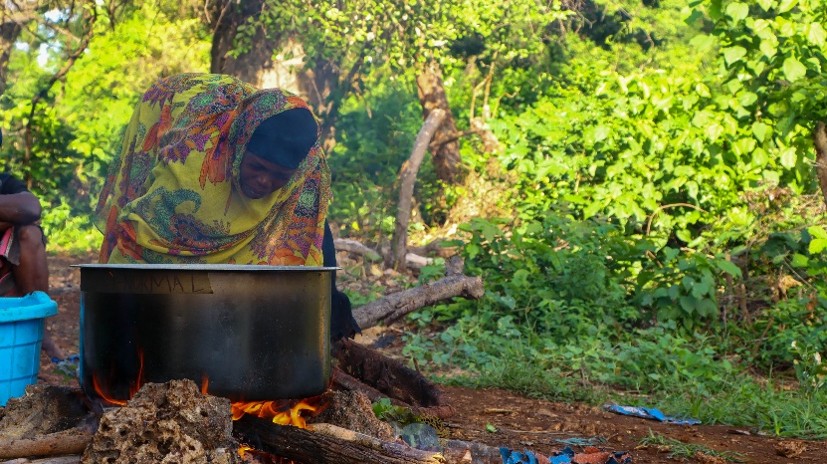
This was the daily working condition for the processors when we met them.
It was clear to us that there was a need for a better working environment. But before thinking about solutions, we needed to understand the processors and their businesses better.
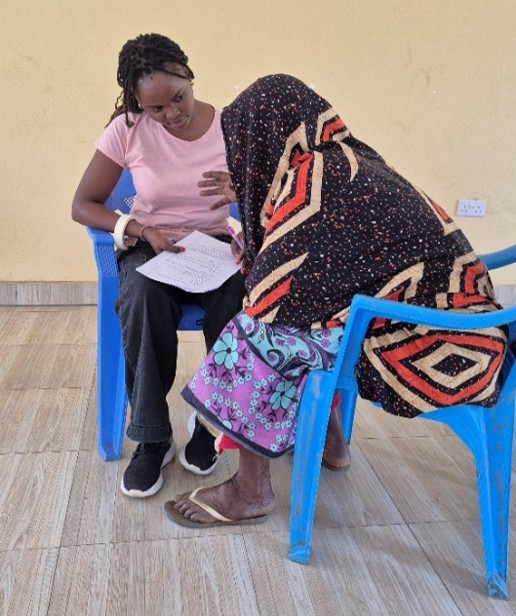
Through our discussions, we learned that the challenges went beyond the poor working conditions. The processors also needed better access to skills, savings and affordable credit.
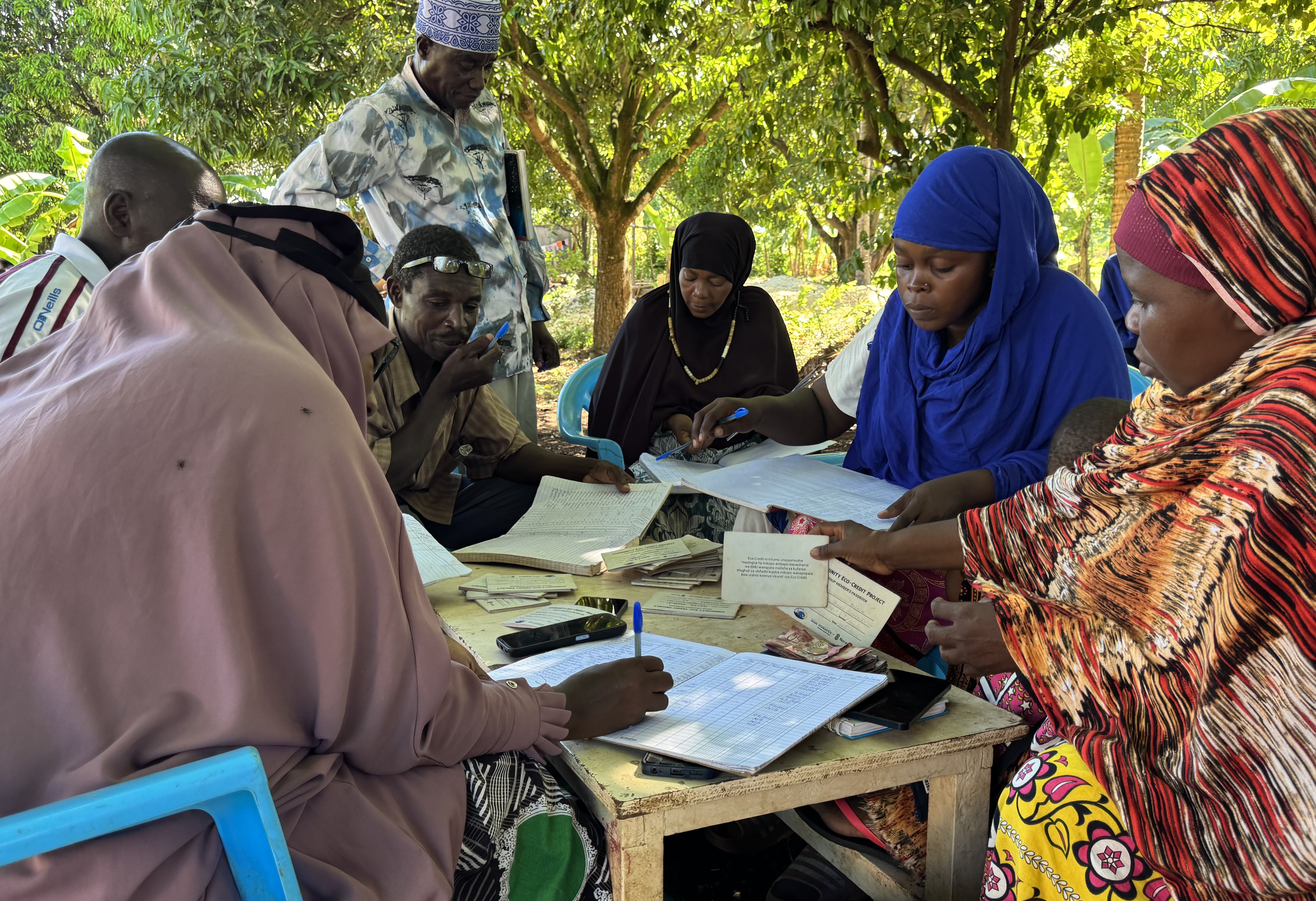
Over the next couple of months, we worked with the processors to form an Eco-credit group where they could save and access credit. We also had trainings on leadership, life skills, business skills and financial literacy. As we got to know the group better, we also discussed how we could improve their working conditions.
Eventually, the processing area was ready. It had a working shed to protect the processors from the hot sun, a water pump, washing areas, washrooms, energy-saving ovens, boiling containers and 20 drying racks.
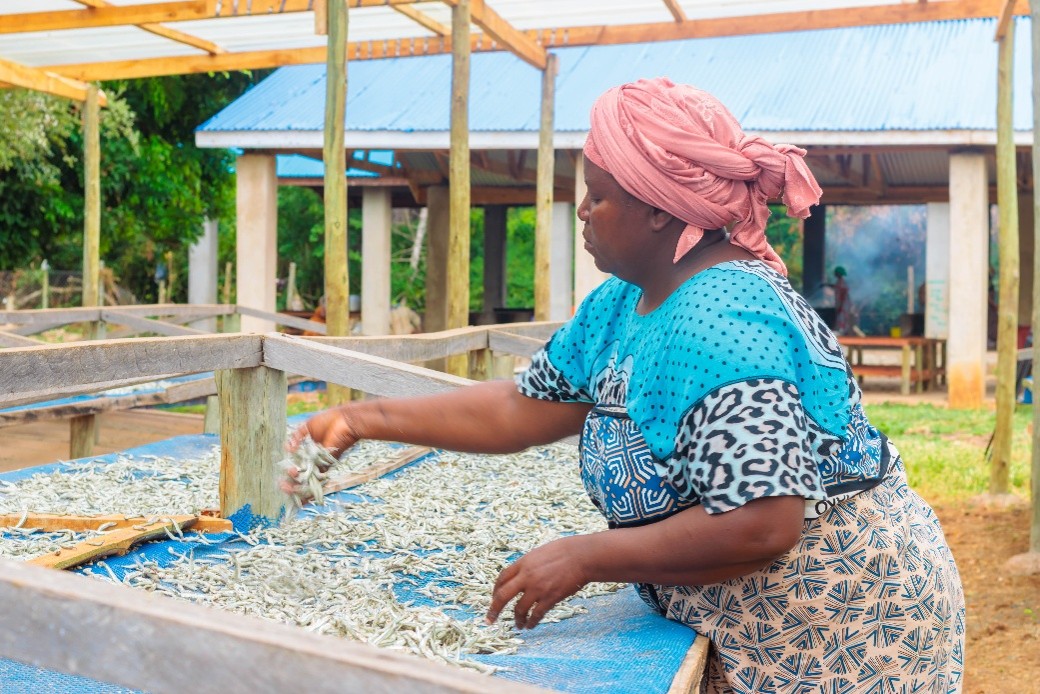
It took a lot of time, effort and resources to get here.
So when I returned a few months later and found some of the processors still drying dagaa on the ground, I was surprised.
I wanted to understand what was happening.
When I asked why, I learned that the processors were not rejecting the racks. Some were concerned about losing the dagaa byproduct, “wishwa,” because there was no collecting equipment underneath the racks. The byproduct would fall to the ground. They preferred using polythene sheets laid on the ground because these allowed them to collect the byproduct, which they could then sell and earn additional income.
The drying racks addressed one of the gaps we had identified, but without a way to collect the “wishwa,” they did not make sense to some of the processors.
We met with the group to discuss how we could address this challenge.
We eventually constructed boards underneath the racks. The boards prevented the by product from falling on the ground, making it easier to collect. This allowed the processors to continue earning from the byproduct while removing the barrier to using the racks.
Today, during the peak dagaa season, the drying racks are fully occupied and are not enough to accommodate all the processors. Some still dry dagaa on the ground, not because they prefer the ground, but because there are not enough racks for everyone.
What the dryingracks taught me: Behaviour change is not automatic. People do not always adopt solutions simply because they appear better to us. They consider how a solution affects their entire livelihood.
The drying racks were a good example. We saw the benefits of drying dagaa off the ground, but some processors were also thinking about what would happen to the "wishwa" and the income they earned from it. What looked like a simple improvement to us had implications for another part of their business.
I am learning that before asking why people are not changing a practice, I need to understand what makes them continue with the existing practice.
About this reflection
This is a personal reflection from Jane Muteti, COMRED’s Program Manager, based on her experience working with Kibuyuni Dagaa Processors.